How-to
5 min read
Tips for Recycling at Home
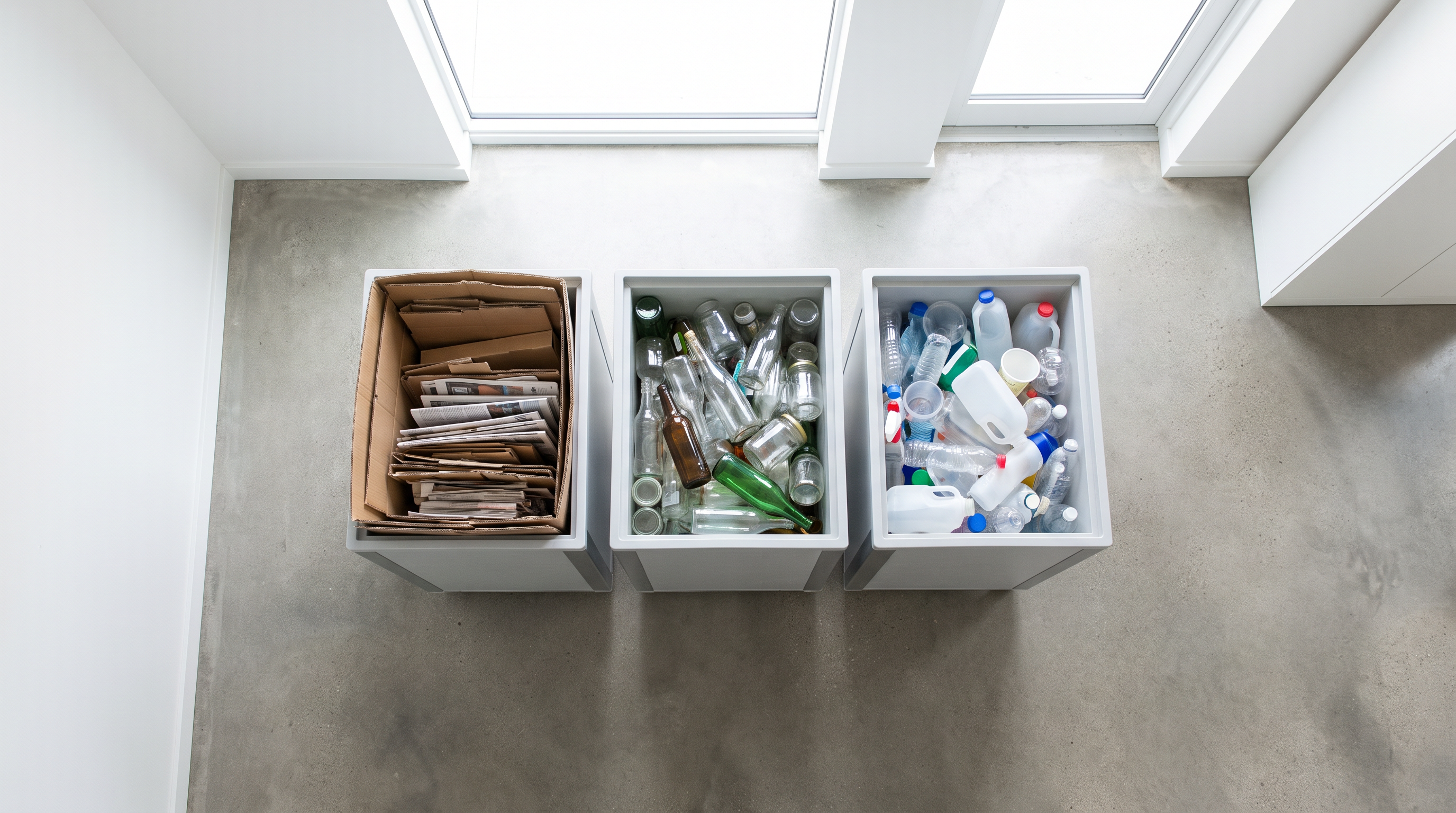
Recycling at home costs little and takes only a few minutes to set up. A couple of labeled bins near where household trash already collects is usually enough to start — the bigger challenge isn't effort, it's knowing what actually belongs in each stream.
Here are a few habits that make the biggest difference:
- Rinse before you bin it. Food residue is one of the most common reasons a recycling load gets rejected at the sorting facility and sent to a landfill instead of being processed. A quick rinse is worth more than a full bin of unrinsed jars.
- Check your local program's rules. Plastic film, greasy pizza boxes, and small items like bottle caps are handled differently depending on where you live. "Wishcycling" an item your hauler can't actually process can contaminate an entire batch.
- Break down boxes. Flattened cardboard takes up far less space in a bin and is easier for sorting equipment to handle.
- Keep a separate bin for glass if your program requires it — glass and single-stream recyclables don't always mix well in processing.
- Pair recycling with composting. Food scraps and yard waste turned into compost close the loop instead of taking up landfill space, and they don't belong in a recycling bin to begin with.
None of this requires special equipment or a big lifestyle change — just a little consistency. Once the habit is in place, recycling stops feeling like a chore and becomes just another part of taking out the trash.